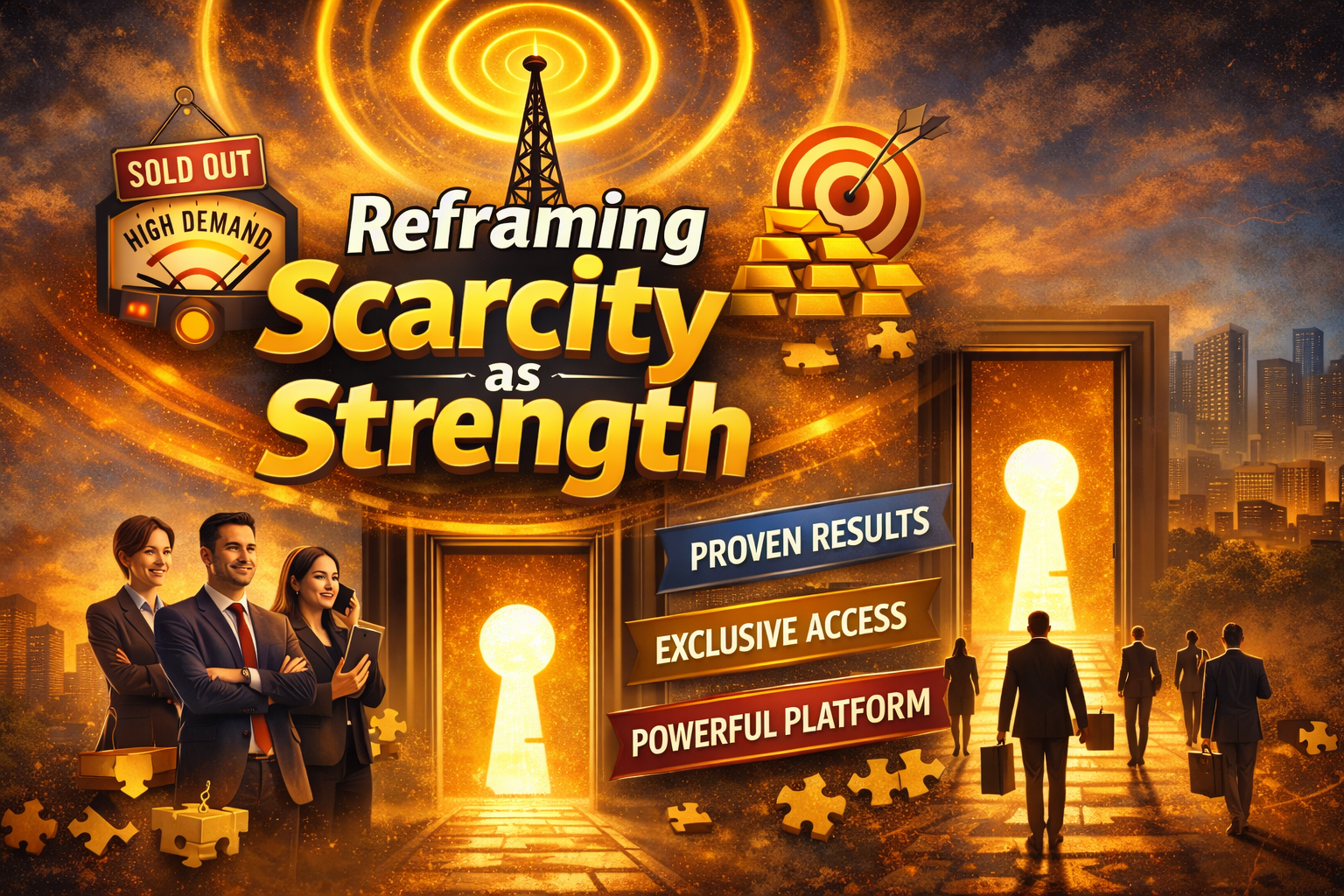
When you truly understand your value, scarcity stops being something you apologize for—and starts becoming your strongest story.
Too many radio stations still treat sold-out inventory like a problem to be solved. It isn’t. It’s proof of demand. It’s evidence that the product works. Scarcity doesn’t signal weakness; it signals success.
Scarcity says, “This platform delivers results.”
It says, “Advertisers want access to this audience.”
And it says, “If you want in, you need to act—because others already understand the power here.”
The moment a seller internalizes that truth, everything changes.
They stop sounding like vendors scrambling to fill space and start speaking like advocates for a platform they believe in. Their posture shifts. Their confidence sharpens. Their conversations feel less transactional and far more intentional.
Radio doesn’t need to be defended. It needs to be championed.
This is a medium that can still drive mass awareness overnight—while also being measurable, targetable, and more trusted than any algorithmically curated feed. That combination isn’t a liability. It’s an unfair advantage. But only if sellers believe it.
When sales teams become believers, they stop chasing clients and start curating partnerships. They stop negotiating against themselves. They stop leading with price and start leading with outcomes.
That’s the real mindset shift:
-
From filling spots to offering access
-
From discounting rates to defending results
-
From selling time to selling transformation
Scarcity is strength. Belief is contagious.
And when an entire team sees themselves as evangelists for radio—rather than order-takers for airtime—you don’t just fill logs.
You fill pipelines.
You fill calendars.
You fill the market with confidence.
That’s what happens when you lead with belief.